
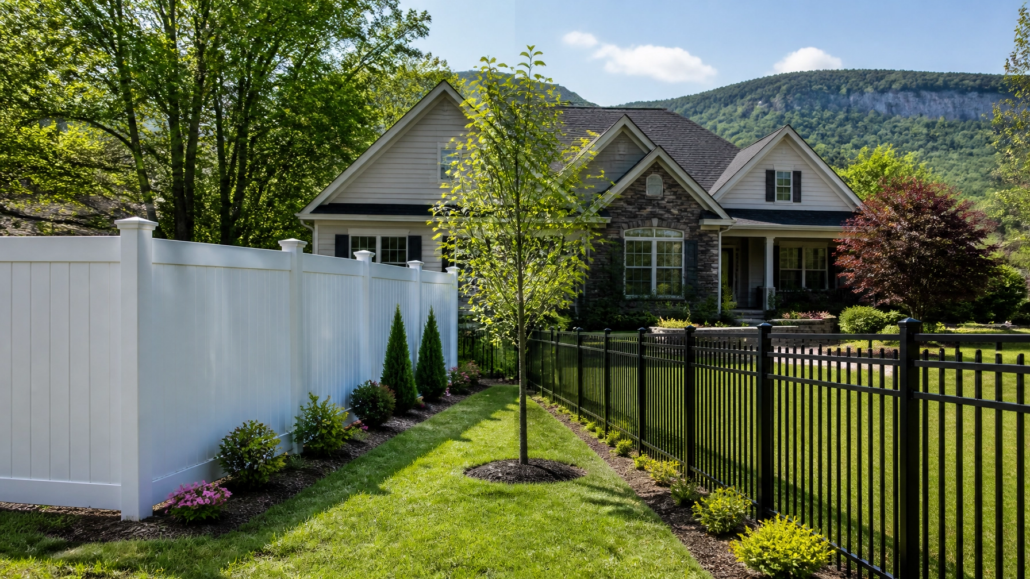
Vinyl vs. Aluminum Fencing: Which Low-Maintenance Option Is Better for Your Chattanooga Home?
Choosing a fence for your home involves more than picking a color or style. In Chattanooga, North Georgia, and Alabama, your fence must handle high humidity, heavy rain, strong storms, intense sun, and seasonal freeze-thaw cycles.
Two of the most popular low-maintenance options are vinyl and aluminum fencing. Both can improve curb appeal, protect children and pets, and reduce the upkeep associated with wood. However, they serve different purposes.
Vinyl fencing is usually the better choice for privacy and a lower initial investment. Aluminum fencing is often the better choice for long-term durability, security, and an open, elegant appearance.
Here’s how the two materials compare for homeowners in the Southeast.
Vinyl and Aluminum Fencing at a Glance
| Factor | Vinyl Fencing | Aluminum Fencing |
|---|---|---|
| Maintenance | Occasional washing; no painting or staining | Occasional rinsing and hardware checks |
| Privacy | Excellent with solid panels | Limited with standard picket designs |
| Moisture resistance | Will not rot, warp, or attract termites | Highly resistant to corrosion and moisture |
| Storm performance | Solid panels can catch wind | Open pickets allow more wind to pass through |
| Typical lifespan | Often 20–30 years with proper installation | Commonly 25–50 years or more |
| Upfront cost | Often slightly lower, depending on style | Often higher, especially for ornamental designs |
| Security | Creates a strong visual barrier and difficult-to-cross boundary | Provides strong perimeter control and clear visibility |
| Best use | Backyards, privacy areas, pools, pets | Front yards, pools, boundaries, gates, security |
Actual pricing and performance depend on the fence height, layout, terrain, gate requirements, material quality, and installation method.
Low Maintenance in Chattanooga’s Humid Climate
Both vinyl and aluminum are easier to maintain than traditional wood fencing. Neither requires routine staining, sealing, or painting, which is especially valuable in a humid climate.
Vinyl Fence Maintenance
Vinyl fencing is made from a durable PVC material that resists moisture-related damage. Unlike wood, it does not rot, splinter, or attract termites. For many homeowners, the primary maintenance task is simply cleaning the surface once or twice each year.
In shaded or damp areas, vinyl may collect:
- Dirt and pollen
- Algae or mildew film
- Mud splashes
- Grass stains from mowing
- Mineral deposits from irrigation
Most buildup can be removed with a garden hose, mild soap, and a soft brush. Abrasive cleaners and aggressive pressure washing should be avoided because they may dull or scratch the finish.
Vinyl is a practical option for homeowners who want a clean, finished look without the recurring maintenance required by wood. Action Fence’s vinyl fence installation services include privacy and decorative styles for homes, businesses, and farms.

Aluminum Fence Maintenance
Aluminum fencing typically requires even less routine care. A powder-coated aluminum fence can resist fading, peeling, and corrosion while maintaining its appearance through Chattanooga’s humid summers and rainy seasons.
Recommended upkeep includes:
- Rinsing the fence occasionally
- Checking screws, brackets, and gate hardware
- Inspecting for scratches or chips after storms
- Keeping vegetation from pressing against the fence
- Cleaning leaves and debris from gate areas
Aluminum does not rust in the same way untreated steel does. If the powder-coated surface is damaged, it is best to address the area with an appropriate exterior touch-up product.
Action Fence uses aluminum fencing for a variety of residential applications, including ornamental boundaries, pool fencing, pet containment, and custom gates. Learn more about aluminum fence installation in Chattanooga.
Durability Through Humidity, Storms, and Freeze-Thaw Cycles
Chattanooga-area fencing must be designed for more than ordinary sunshine. Heavy rain can soften soil, thunderstorms can create sudden wind loads, and winter temperature changes can shift the ground around fence posts.
How Vinyl Handles Southeast Weather
Vinyl performs well in humid conditions because it does not absorb moisture like wood. It will not rot or decay, making it a strong choice for areas exposed to rainfall and lawn irrigation.
The main weather consideration is wind. Solid vinyl privacy panels have more surface area than open fencing, so they can act like a sail during severe storms. Proper post spacing, concrete footings, panel design, and installation depth are essential.
Freeze-thaw cycles can also affect the soil around fence posts. As wet ground freezes and expands, then thaws and contracts, poorly installed posts may lean or become loose. This is an installation issue as much as a material issue, which is why professional layout and footing preparation matter.
How Aluminum Handles Southeast Weather
Aluminum is naturally resistant to moisture and corrosion, and powder-coated finishes provide additional protection from UV exposure and changing weather conditions. The open picket design also allows wind to pass through, reducing the solid-wall effect associated with tall privacy fencing.
Aluminum is lightweight but strong, and many styles can follow gradual changes in grade. It is especially useful where homeowners want a durable perimeter without blocking views.
For areas exposed to frequent storms, aluminum may offer an advantage because its open design places less wind pressure on the fence. Still, no fence is storm-proof. Strong posts, quality hardware, and correct installation remain critical.
Privacy vs. Openness: Which Look Fits Your Property?
The biggest difference between vinyl and aluminum is how much visibility they provide.
Choose Vinyl for Privacy
Vinyl is the clear winner when your priority is creating a private outdoor area. Solid panels can block views from neighboring homes, streets, and nearby properties. They are often used for:
- Backyard privacy
- Patios and outdoor living spaces
- Pool areas
- Hot tubs
- Pet areas
- Screening around HVAC equipment
- Reducing visibility and some outdoor noise
Vinyl fencing is available in traditional privacy, semi-privacy, picket, and ranch-style designs. White remains a popular choice, but neutral colors and wood-grain textures can provide a more customized appearance.
Choose Aluminum for Openness and Visibility
Aluminum fencing typically uses vertical pickets and horizontal rails. It defines the property line while preserving views of landscaping, gardens, architecture, or surrounding scenery.
It is a popular choice for:
- Front yards
- Sloped properties
- Pool enclosures
- Driveway entrances
- Decorative boundaries
- Homes with landscaping that should remain visible
Aluminum can create an elegant, classic appearance similar to wrought iron without the same weight and maintenance demands. Ornamental details, finials, arches, and multiple color options can also increase curb appeal.

Cost Comparison: Vinyl vs. Aluminum
Fence pricing varies considerably from one property to another. As a general industry comparison, installed vinyl fencing may range from approximately $20 to $40 per linear foot, while aluminum fencing may range from approximately $25 to $40 or more per linear foot. Privacy panels, premium ornamental styles, difficult terrain, multiple gates, and extensive site preparation can increase the total.
You can review one industry comparison of vinyl and aluminum fence costs, but online averages should only be used as a starting point.
Vinyl often has a lower initial cost, particularly for standard privacy applications. Aluminum may cost more upfront, but its longer potential service life and minimal maintenance can make it a strong long-term investment.
The most useful question is not only, “Which fence costs less today?” Consider:
- How long you plan to remain in the home
- Whether you need full privacy
- How many gates are required
- Whether the property is sloped
- How much storm exposure the fence will receive
- Whether matching automated gates or access control are needed
- The cost of future repairs or replacement
A professional consultation can provide a more meaningful comparison based on your actual property.
Longevity and Long-Term Value
Vinyl fencing can provide decades of service when it is properly installed and cared for. Its appearance may gradually change over time depending on sun exposure, weather, material quality, and impact from landscaping equipment or storms. Individual damage may sometimes require replacing a panel or section.
Aluminum fencing can last for several decades, particularly when it has a durable powder-coated finish and quality hardware. If a section is damaged, individual rails, pickets, or panels may be repairable depending on the design.
For homeowners planning to stay in their property for many years, aluminum may offer greater long-term value. For homeowners who want affordable privacy and low maintenance now, vinyl can be the more practical choice.
Security: Privacy Barrier or Perimeter Control?
Both materials can improve residential security, but they do so in different ways.
Vinyl provides a visual barrier. A solid fence can make it harder for passersby to see into your yard, which may provide privacy and discourage unwanted attention. However, tall solid panels can also limit your view of activity outside the fence.
Aluminum provides visibility. You can see toward the street, driveway, or surrounding property while still establishing a defined boundary. Its strong rails and pickets make it a useful choice for perimeter control, pools, pets, and front-yard security.
Your gate also plays an important role. Action Fence installs automatic driveway gates and access control systems for residential and commercial properties. Options may include swing, sliding, cantilever, keypad, card reader, telephone entry, and remote access systems.

Which Low-Maintenance Fence Is Better for Your Chattanooga Home?
Use this framework to make your decision:
Choose vinyl if you:
- Need full backyard privacy
- Want to block views from neighbors or the street
- Prefer a clean, solid-panel appearance
- Want a lower upfront investment
- Need a low-maintenance alternative to wood
- Are enclosing a patio, pool area, or pet space
Choose aluminum if you:
- Prefer an open, decorative appearance
- Want to preserve views and landscaping
- Prioritize long-term durability
- Need a strong perimeter boundary
- Want a material that handles humidity and moisture well
- Are considering an ornamental fence, pool fence, or driveway gate
Consider combining both materials if you:
- Want privacy in the backyard and openness in the front
- Need aluminum around a pool or front boundary but vinyl along neighboring property lines
- Want a coordinated fence and automated gate system
- Need different levels of visibility around one property
There is no single best fence for every Chattanooga homeowner. The right choice depends on your goals, property conditions, budget, and preferred appearance.
Action Fence Company of Chattanooga installs both vinyl and aluminum fencing throughout Tennessee, North Georgia, and Alabama. With more than 45 years in business, over 150 years of combined team experience, comprehensive warranty coverage, financing options, and a partner-focused approach, we can help you compare your options with confidence.
Contact Action Fence for a free estimate and consultation, or call 423-205-7344 to discuss your Chattanooga fence project.